
Read the data.
See the pattern.
Structured courses and practical guides for exploring, organizing and interpreting data.

01 / INSIDE THE MATERIAL
Inside the Material
Explore how the materials are organized: guided explanations, worked examples, practice activities and review prompts for independent study.
PDF Guides & Coursebooks
Topic-focused explanations, vocabulary references and annotated examples in a written learning format.
Worksheets & Checklists
Practice activities covering metric definitions, data preparation and structured analytical checks.
Review Prompts & Offline Study
Review questions encourage reflection and revision. Downloadable PDF files can be studied offline after they are provided.
Start with data types, simple metrics and reading tables.
Free GuideSTART WITH THE BASICS
Get Free Guide
03 / LEARNING PATHS
Learning Paths
Start → Build → Integrate: three ways to navigate the ten data-analysis subjects. Each course can be considered independently.
Start with the data
Explore the stages above to see the related study areas.
04 / PRACTICE EXAMPLES
Practice Examples / What You'll Work Through
Three realistic tasks drawn from the corresponding course outlines. These use illustrative data rather than customer case studies.
Explore Grid Module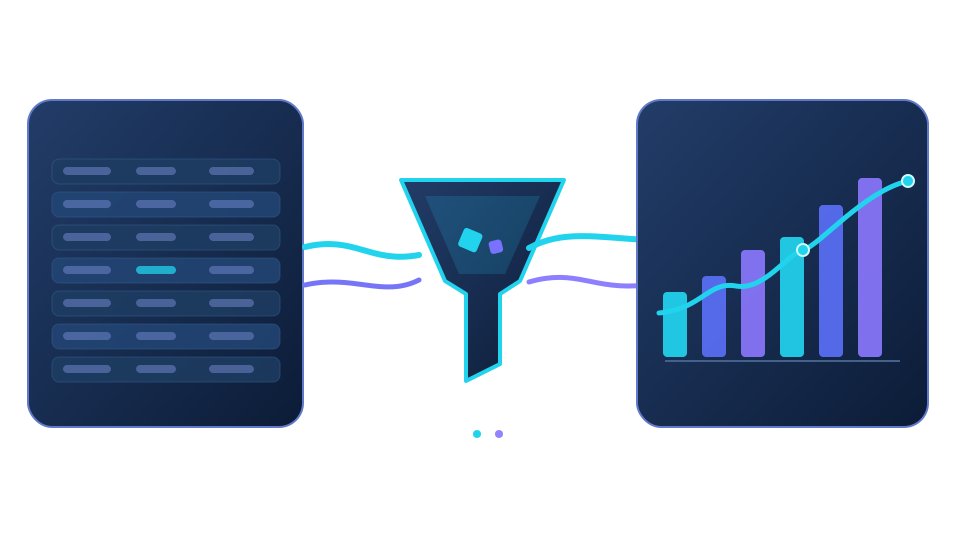
05 / OUR APPROACH
Who We Are
Rynqalvexopin is a catalog of written learning guides about data analysis. Each course focuses on a defined subject, from reading tables to evaluating models. The outlines pair concepts with fictional datasets and review tasks. The materials are designed for independent study rather than scheduled classes.
Who We AreOUR PURPOSE
Our Mission
Our mission is to explain analytical concepts with clear definitions and practical context. We emphasize inspecting data before drawing conclusions. We connect preparation, querying, visualization and interpretation through worked examples. We encourage learners to describe limitations alongside their findings.
How the Materials Are Organized
Written Explanations
Focused terminology and examples, organized by topic.
Table-Based Practice
Concrete data-cleaning and comparison scenarios.
Visual Interpretation
Charts, labels and context discussed together.
Clear Subject Paths
Ten distinct courses grouped into four learning areas.
06 / QUESTIONS
Questions Before You Begin?
Straightforward answers about subject coverage, digital materials and study format.
View All QuestionsWhat subjects does Rynqalvexopin cover?
The catalog includes ten separate courses covering data literacy, analytical metrics, data preparation, SQL, exploratory analysis, visualization, Python, statistics, forecasting and integrated cases.
What is included in a course?
The proposed format is a written PDF guide with explanations, examples, exercises and review notes. Exact included files must be confirmed on the individual course page when materials are ready.
Are these live classes or scheduled sessions?
No live classes or scheduled sessions are part of the current course specification. The planned materials are written, self-directed learning guides.
How are materials delivered?
Downloadable PDF delivery is planned. The actual file links and delivery process must be tested and described before a course is made available for ordering.
How do I choose between SQL and Python topics?
Cipher Bundle focuses on relational queries and joins. Nexus Framework focuses on Python-based tabular operations and analytical workflows.